
Every ingredient, named and explained.
Pick a product and you'll see exactly what's in it, why it's there, and what we left out. If you can't tell what something does from reading the label, that's a problem with the label.
What's in it
Rooted in Korean scalp care.
Each one is here for a reason we can explain. Korean names included, because that's where these come from.
Scalp Bar
Twelve plants and two oils, and we can tell you what every one of them is doing here.
They are listed in the order they appear on the box, which is the order of
weight — so the ones at the top are the ones there is most of.
 올리브
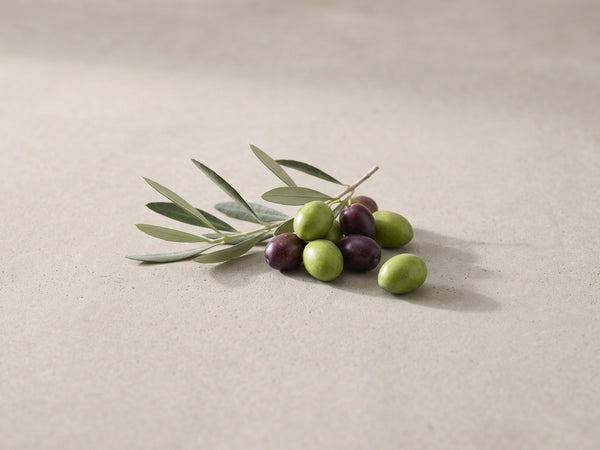
올리브Olive
Olea europaeaThe second ingredient by weight, and most of what makes this a bar rather than a brick.
Olive
Olea europaeaThe second ingredient by weight, and most of what makes this a bar rather than a brick.
Olive oil has been used on skin around the Mediterranean for about as long as anything has. Here it does the unglamorous work: it carries the cleanser, keeps the bar from drying your scalp out as it washes, and gives the whole thing enough body to hold its shape for a month in a wet bathroom.
 대청
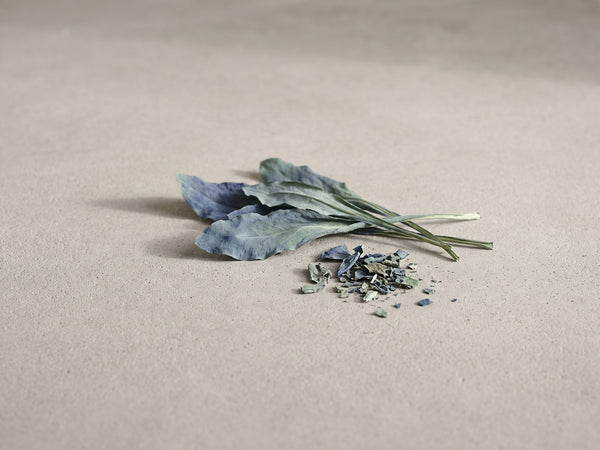
대청Isatis
Isatis tinctoriaWoad. A cooling herb in traditional East Asian medicine, used on skin that runs hot.
Isatis
Isatis tinctoriaWoad. A cooling herb in traditional East Asian medicine, used on skin that runs hot.
You may know it as the plant medieval Europe made blue dye from. In Korea and China the leaf is a traditional remedy for heat and irritation, and that is the reason it is this high up the list. It is not here for colour.
 측백
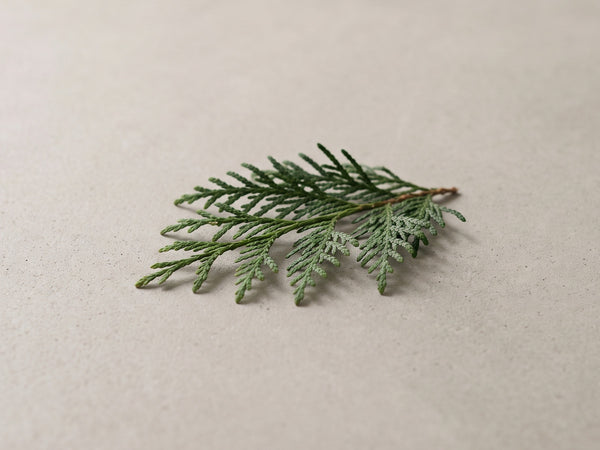
측백Biota
Biota orientalisOriental arborvitae. One of the oldest hair herbs in the Korean materia medica.
Biota
Biota orientalisOriental arborvitae. One of the oldest hair herbs in the Korean materia medica.
Cebaekyeop, 측백엽, turns up in hair and scalp preparations in Korean medical texts going back centuries. Almost nobody outside East Asia formulates with it, which is part of why this bar smells and behaves differently to whatever you used before.
 코코넛
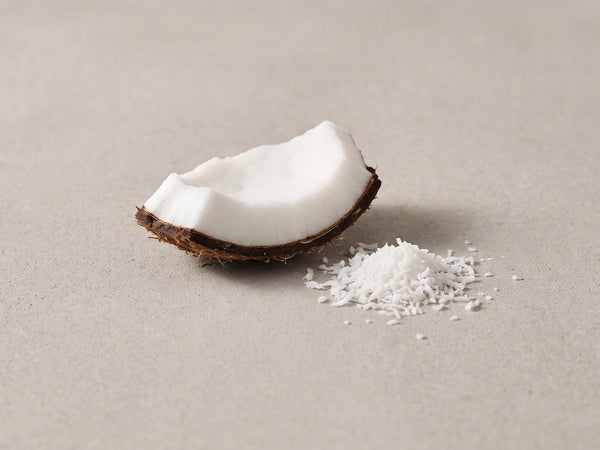
코코넛Coconut
Cocos nuciferaWhere the lather comes from, and where the cleanser itself is derived from.
Coconut
Cocos nuciferaWhere the lather comes from, and where the cleanser itself is derived from.
Two jobs. The oil is in the bar directly, and the surfactant that does the actual cleaning — sodium cocoyl glycinate — is built from coconut fatty acids joined to the amino acid glycine. So the coconut is both an ingredient and the raw material for the ingredient above it.
 시어버터
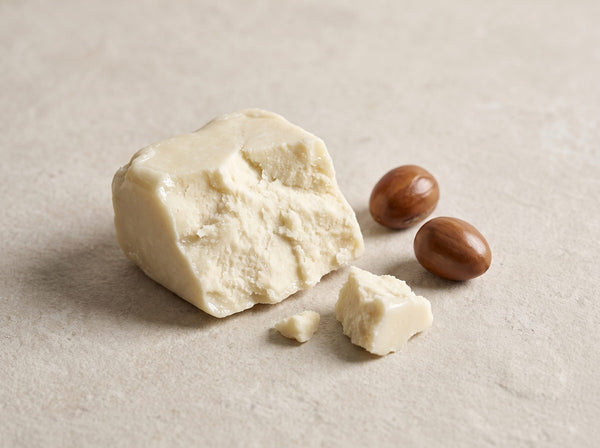
시어버터Shea butter
Butyrospermum parkiiThe reason your ends do not feel stripped after a wash that has no conditioner in it.
Shea butter
Butyrospermum parkiiThe reason your ends do not feel stripped after a wash that has no conditioner in it.
Shea is the buffer. A cleanser removes oil by definition; shea puts a little of it back on the way past, which is what lets most people skip conditioner for the first fortnight without their lengths turning to straw.
 티트리
티트리Tea tree
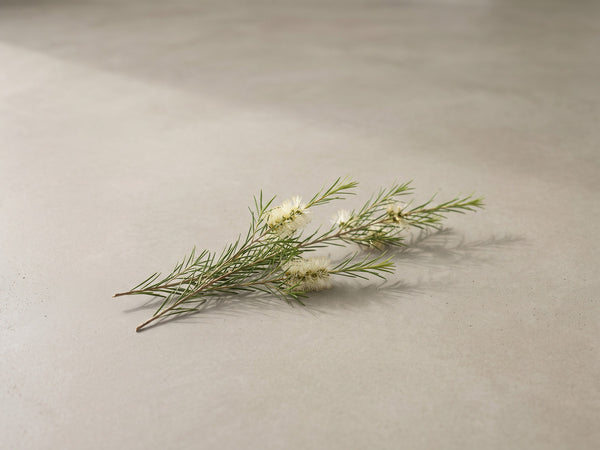
Melaleuca alternifoliaThe clean, sharp note you smell. Long used on scalps that flake.
Tea tree
Melaleuca alternifoliaThe clean, sharp note you smell. Long used on scalps that flake.
Tea tree is one of the few botanicals in this category with a genuine body of research behind it, and it is also a known contact allergen for a small number of people. If you have reacted to tea tree before, this is the ingredient to know about — patch test on your inner forearm first.
 로즈마리
로즈마리Rosemary
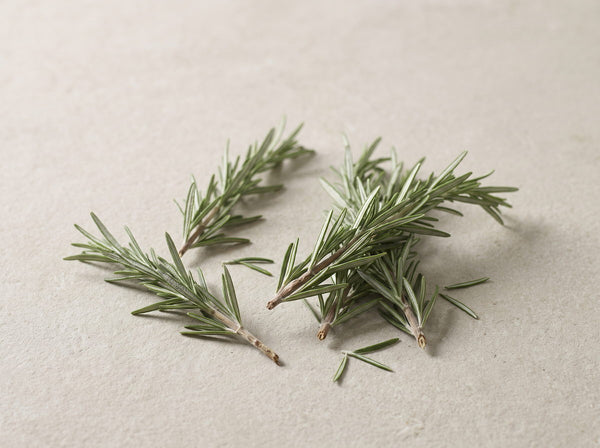
Rosmarinus officinalisThe most-studied botanical in scalp care, and the reason this bar is green rather than dyed green.
Rosemary
Rosmarinus officinalisThe most-studied botanical in scalp care, and the reason this bar is green rather than dyed green.
Rosemary is having a moment, and for once the popular ingredient is also the researched one. In a bar it sits on the scalp for the length of a wash rather than passing through in a rinse, which is the whole argument for applying it where it is meant to go.
 하수오
하수오He shou wu
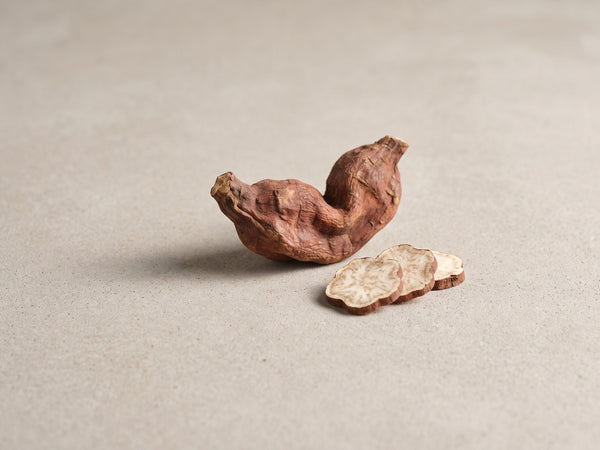
Polygonum multiflorumThe root East Asian medicine reaches for when the subject is hair. For eight centuries.
He shou wu
Polygonum multiflorumThe root East Asian medicine reaches for when the subject is hair. For eight centuries.
The name is a story. He shou wu translates as "Mr He's black hair", after the man the legend is told about. Whatever you make of the legend, this is the single most traditional hair ingredient in the entire formula, and it is the one we would keep if we could only keep one.
 동백
동백Camellia
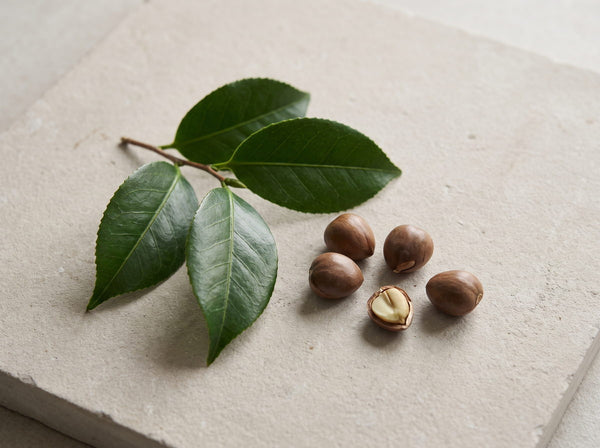
Camellia japonicaTsubaki. The classic East Asian hair oil, light enough not to weigh anything down.
Camellia
Camellia japonicaTsubaki. The classic East Asian hair oil, light enough not to weigh anything down.
Japanese and Korean women have used camellia seed oil on hair for centuries, and it is still the oil of choice for fine hair that goes limp under anything heavier. In a bar it means the lengths get something without the roots paying for it.
 인삼
인삼Ginseng
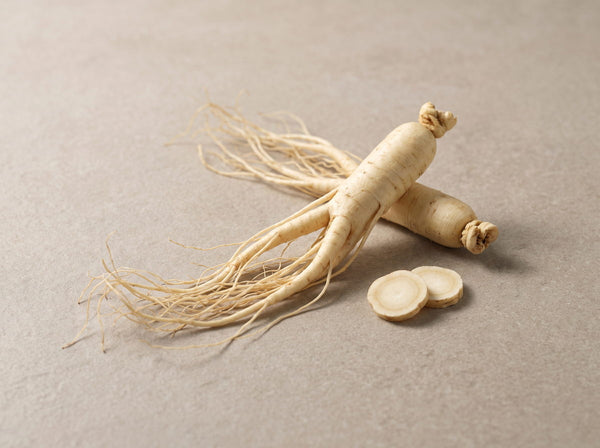
Panax ginsengThe backbone of hanbang, and the first thing a Korean scalp formula reaches for.
Ginseng
Panax ginsengThe backbone of hanbang, and the first thing a Korean scalp formula reaches for.
If one ingredient signals that a formula is Korean rather than generic botanical, it is this one. Ginseng is in Korean skincare the way niacinamide is in Western skincare: everywhere, for a long time, for the barrier rather than instead of it.
 고삼
고삼Sophora
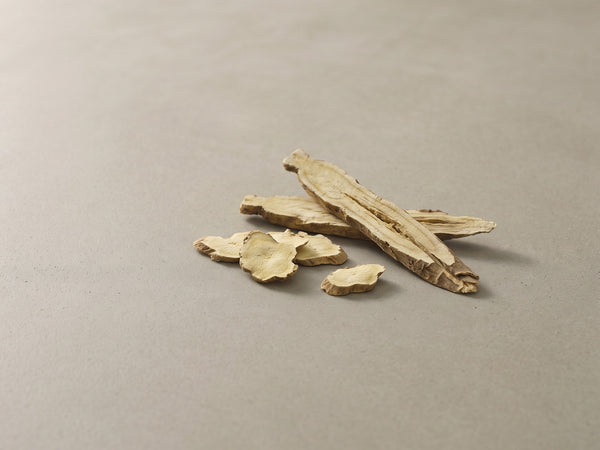
Sophora flavescensKu shen. The traditional answer to a scalp that itches.
Sophora
Sophora flavescensKu shen. The traditional answer to a scalp that itches.
Bitter root, used in Korean and Chinese medicine for itching and irritated skin specifically. It is not a famous ingredient and it never will be, but it is one of the reasons comfort is the first thing most people notice rather than anything to do with density.
 영지
영지Black reishi
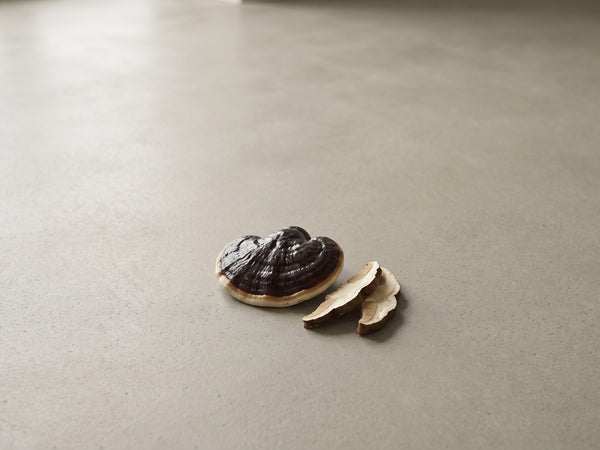
Ganoderma atrumThe mushroom of immortality, according to people who named it a long time ago.
Black reishi
Ganoderma atrumThe mushroom of immortality, according to people who named it a long time ago.
Reishi is one of the oldest recorded remedies in East Asia and the dark variety is the less common one. Strictly it is a fungus rather than a plant, which is the sort of detail we would rather tell you than have you find out.
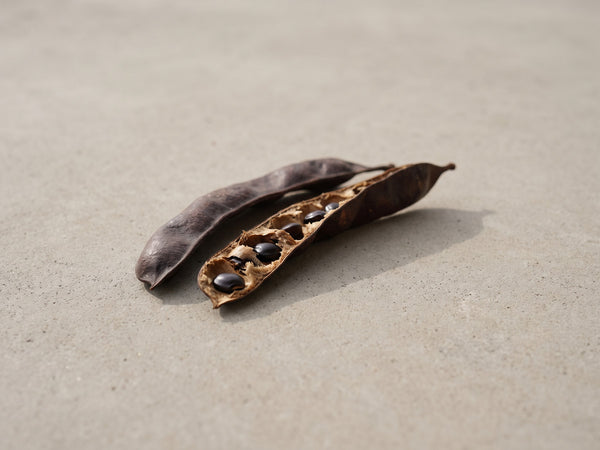 조각자
조각자Soap pod
Gleditsia sinensisWhat Korean households washed their hair with, long before anyone bottled shampoo.
Soap pod
Gleditsia sinensisWhat Korean households washed their hair with, long before anyone bottled shampoo.
Jogakja pods foam on their own — they contain natural saponins, which is exactly why they were used for washing. Finding one in a modern formula is strange, and for a brand selling a bar instead of a bottle it is the ingredient that makes the most sense of all of them.
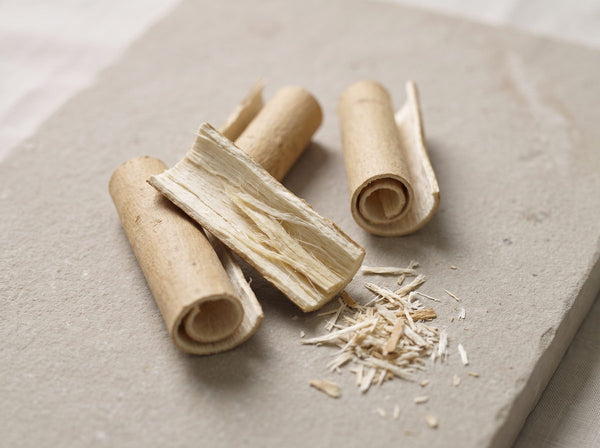 상백피
상백피White mulberry root
Morus albaA traditional Korean clarifying root, and the last botanical on the list.
White mulberry root
Morus albaA traditional Korean clarifying root, and the last botanical on the list.
Sangbaekpi is the root bark, used in hanbang preparations for the scalp. It is at the bottom of the ingredient list, which means there is not much of it — we would rather say that than let the label imply otherwise.
Left out on purpose
What's not in it.
Not because these are all dangerous — most aren't. Because in a routine built around the scalp barrier, they work against the point.
SLS and SLES. The cleanser that takes the barrier off along with the oil.
They coat the shaft, feel smooth on day one, and build up at the root over weeks.
A solid bar has no water in it, so there's no preservative debate to have.
The green is the plants. Nothing has been added to make it look like more than it is.
Liquid shampoo is roughly 80% water. This is 0%, which is the whole reason it's a bar.
Never, anywhere, at any stage.
If you want the detail
Everything else, on request.
Pick a product to see its full ingredient list.
Scalp Bar
What the bar is built on
Extracts don't matter if the thing carrying them strips your scalp. We use sodium cocoyl glycinate — an amino-acid cleanser made from coconut — instead of the sulfates in most liquid shampoo. It lifts oil and buildup while leaving the scalp's barrier lipids largely intact, which is why it doesn't leave that squeaky, tight feeling and why most people end up needing less conditioner, not more.
Full INCI list
Here it is, in the order it appears on the box, which is the order of weight:
Sodium Cocoyl Glycinate, Olea Europaea (Olive) Fruit Oil, Isatis Tinctoria Leaf Extract, Biota Orientalis Leaf Extract, Cetearyl Glucoside, Water, Cocos Nucifera (Coconut) Oil, Butyrospermum Parkii (Shea) Butter, Lanolin, Myristic Acid, Hydrolyzed Keratin, Melaleuca Alternifolia (Tea Tree) Leaf Oil, Rosmarinus Officinalis (Rosemary) Extract, Polygonum Multiflorum Root Extract, Camellia Japonica Seed Extract, Glutamic Acid, Panthenol, Panax Ginseng Extract, Sophora Flavescens Extract, Ganoderma Atrum (Mushroom) Extract, Gleditsia Sinensis Extract, Morus Alba Root Extract, Arginine.
Lanolin comes from wool, so this is not a vegan product. Tea tree and lanolin are both known contact allergens for a small number of people — patch test on your inner forearm for 24 hours before your first wash if your skin reacts easily.
Testing, safety and claims
How we handle the rest.
Testing and sourcing
Our formula is tested by an independent lab for heavy metals, microbial safety and purity. The botanicals are included at working levels, not as a token drop so a name can appear on the front of the wrapper. If you want to see the documentation, email us and we'll send what we have.
Sensitive scalps, pregnancy and other products
It's dye-free and formulated to be gentle, but sensitive is a broad word — patch test on your inner forearm for 24 hours. If you have a diagnosed scalp condition, or you're pregnant or breastfeeding, ask your doctor rather than take a product page's word for it. It works fine alongside a serum or minoxidil; wash, dry, then apply as normal.
A note on our claims
Where we say an ingredient is traditionally used for something, that's exactly what it means — a history of use in Korean scalp care, not a proven medical effect. Formulations change as we improve them, so the wrapper in your hand is always the current list. If it differs from this page, trust the wrapper and email us so we can fix it.
Want the documentation? Just ask.
Lab results, sourcing, the current wrapper — if you want to see any of it before you buy, email and we'll send what we have.