
Sixty seconds.That’s the ritual.
How to do it properly, what happens week by week, and how to make one bar last the full month.
Three steps. One that matters.
Almost everyone who tells us it didn’t work turns out to have been doing twenty seconds.
 1
Glide it on
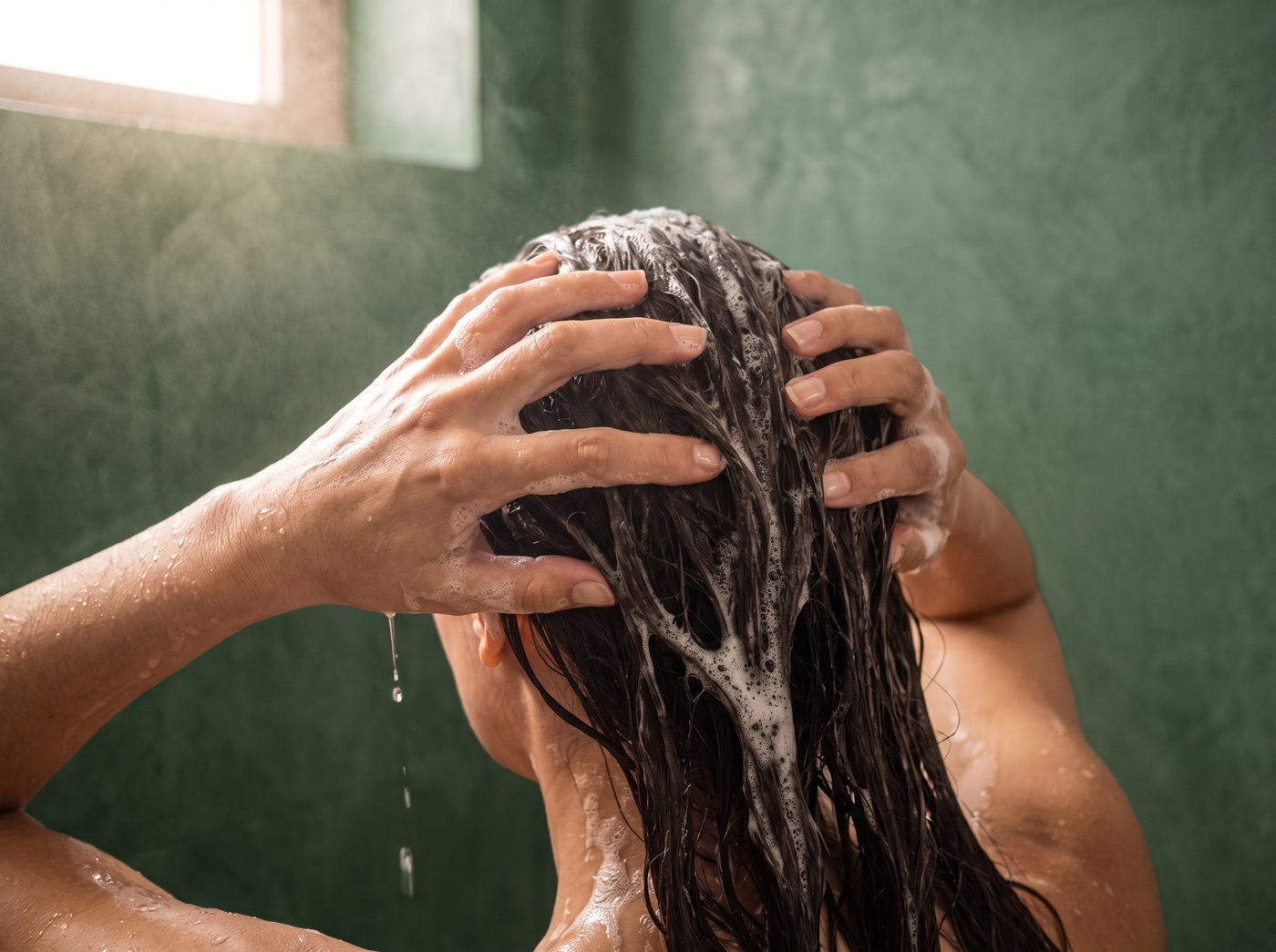
Wet hair first. Run the bar along your scalp in sections — not through the lengths.
 2
Massage a full minute
Fingertips, never nails. Small circles, light pressure. Whole head, including behind the ears.
 3
Rinse and drain
Rinse until the water runs clear, then put it somewhere it can dry.
Set a timer the first three times. A minute is much longer than it feels with your eyes closed in the shower.
What happens, and when
Nobody tells you this part — including the bit in week two that isn’t flattering.
It feels different straight away
Less lather than a bottle, and that’s the point — foam is a sulfate trick, not a cleaning measure. Your scalp should feel clean rather than squeaky.
Your scalp settles first
Itching, tightness and flaking usually ease within the first few washes. This is the quickest thing you’ll notice, and often not the reason you bought it.
The bit that catches people out
Your scalp spent years producing oil at the rate a sulfate shampoo demanded. It doesn’t know you’ve switched. For two to eight weeks it keeps up the old output while a gentler cleanser leaves more of it in place.
The oil settles
The heaviness goes. Hair washes cleaner with less product, and most people find they can stretch a day longer between washes than they used to.
Less in the drain
Where most people notice something they weren’t looking for. It’s gradual, which is exactly why the photo matters.
It changes in your hands
Texture at the root changes before anything is visible in the mirror. Hair holds a style longer and has more body when it dries.
Density and visible thickness take longer still. There’s a reason for that, and it’s further down this page.
Make a bar last the full month
A bar should give you 30 to 40 days. If yours is gone in two weeks, it’s one of these three.
It’s sitting in water
A cleanser works because it dissolves in water. Left in a puddle, the outer layer softens into a paste and slides off next time water touches it. You’re rinsing product down the drain without ever using it.
It’s in the spray
Even a dish that drains won’t help if water lands on the bar every time someone showers. Move it out of the stream — a shelf, a windowsill, the edge of the bath.
Hard water
Less lather and a faint film on your hands. That’s minerals reacting with the cleanser, not the bar failing. It also softens a bar faster, so drainage matters even more.
Rough guide. Thirty to forty days for most people. Shoulder-length hair and a few washes a week puts you at the top of that range; longer or thicker hair, or washing daily, at the bottom.
Hair doesn’t take orders.
It runs on a cycle.
Every hair on your head is somewhere in the same three-stage loop, and the last stage alone runs about three months. Change the scalp today and you don’t see it in the mirror today — you see it when those follicles come round again.
So give it three months before you judge it. Not because the bar is slow — because that’s how long a follicle takes to come back round and show you what changed.
Why a brush beats your fingers
Wet hair pushes back. Your fingertips meet resistance immediately and it feels like contact, so your brain registers the job as done.
But on thick, long or curly hair, most of that pressure lands on hair rather than skin. You can spend a full minute enthusiastically massaging your own hair and barely touch the scalp underneath.
Short or fine hair, and fingertips already reaching skin? Then you don’t need it, and we’d rather say so.
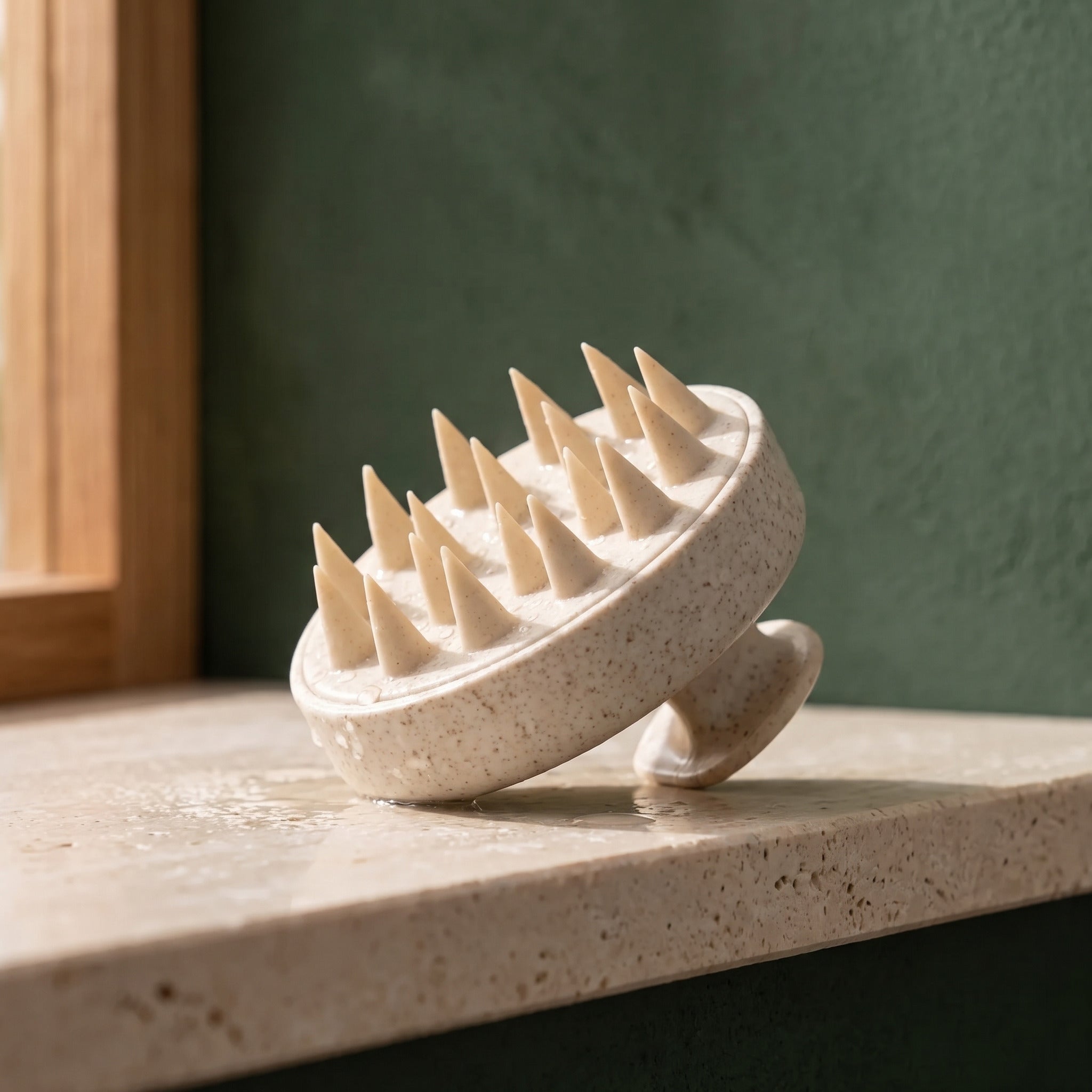
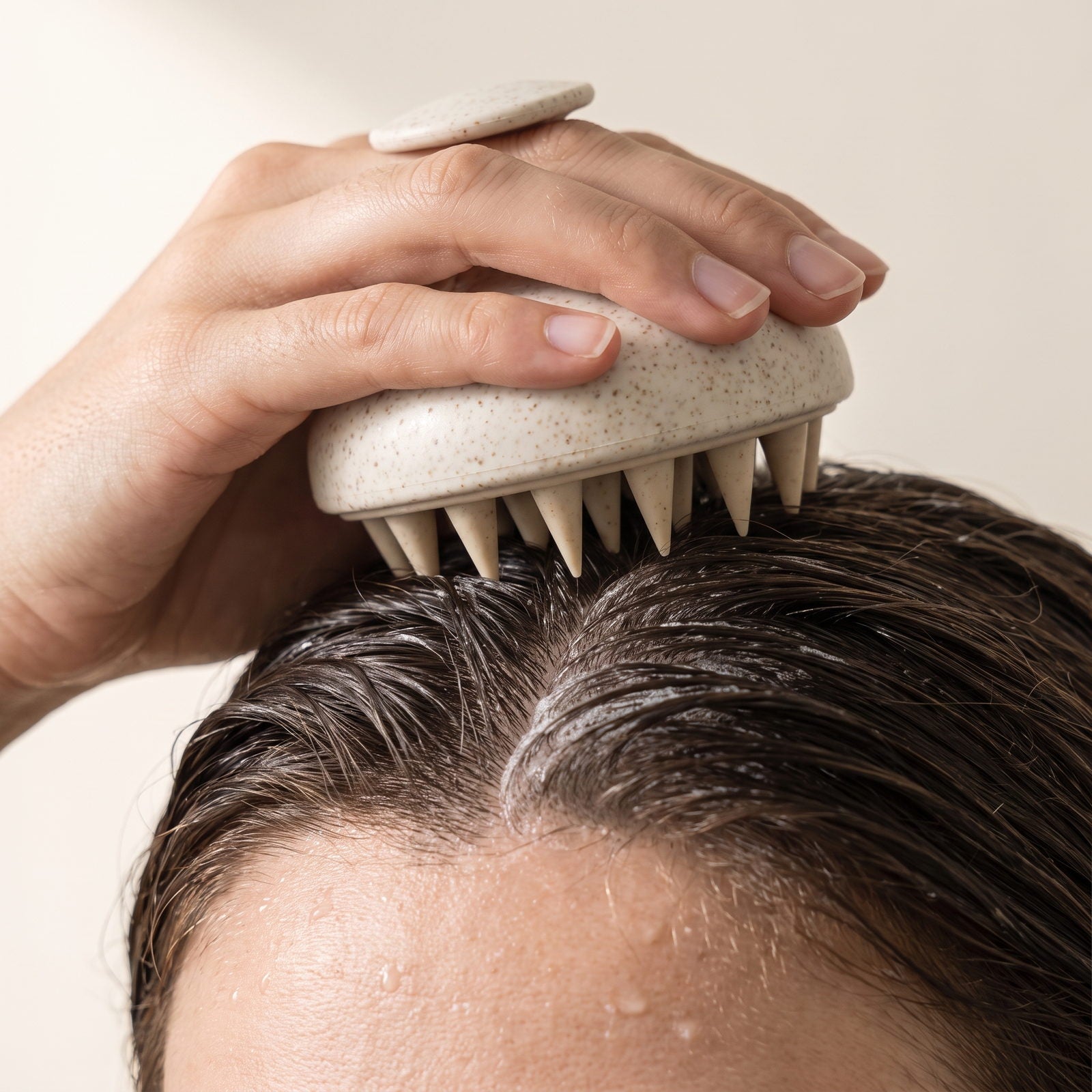

The cheapest thing here, and the one that matters most
Everything in the section above comes down to one question: can the water get away from the bar between washes?
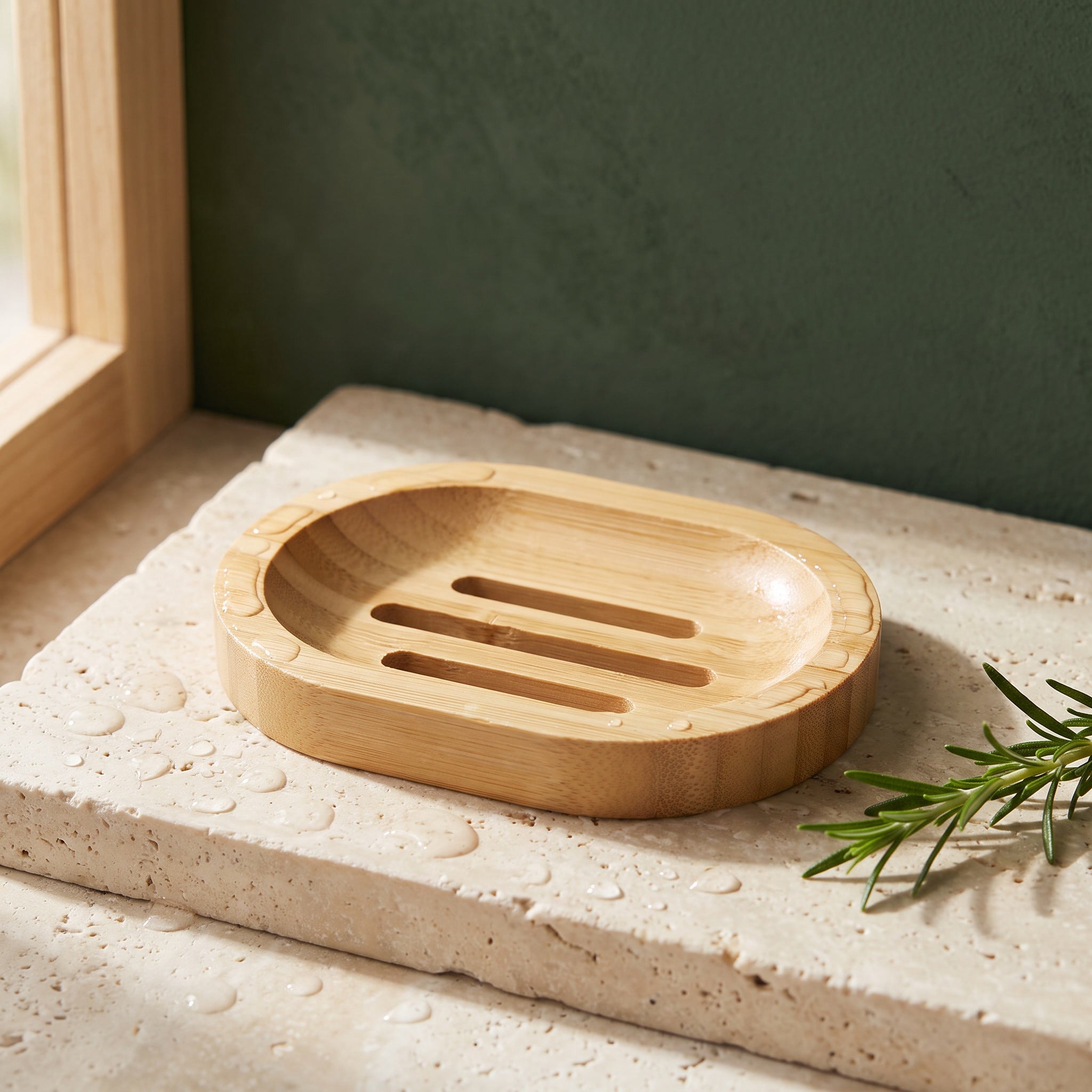
A flat dish holds a shallow puddle you can’t see. The bar sits in it for two days and softens from underneath. Raised slats let air in and water fall through, so the surface dries hard.
Any dish that drains will do this. If you already own one, use it. Ours is $12.95, holds the bar and the brush, and has silicone feet so it doesn’t slide on a wet shelf.
The ones we get most
How often should I wash?
Whatever you were already doing. The bar isn’t a reason to change your frequency, and changing it in the first two weeks makes the adjustment take longer.
What matters is that every wash is this one. Slipping your old shampoo back in between resets the scalp each time, and the weeks stop adding up. Most people end up washing slightly less than before, but that happens by itself once the oil settles.
My hair feels waxy. Am I doing it wrong?
Almost certainly not, if you’re in the first few weeks — see the roadmap above. If it’s been more than eight weeks, check three things: that you’re rinsing until the water runs clear, that you’re not using conditioner at the roots, and whether you have hard water.
Scalp only, or the lengths too?
Scalp only. The lather that runs down while you rinse is enough for the lengths — they don’t need direct contact, and giving them any makes hair feel drier over time.
Can I use it with minoxidil or a serum?
Yes, and most people find their topical absorbs better afterwards, since buildup around the follicle is what stops it getting through. Wash, dry, then apply as normal.
Is it safe on colour-treated hair?
Yes. Sulfates are the main driver of accelerated colour fade and there aren’t any in here.
What if the bar cracks or crumbles?
Usually it dried out too fast in a warm room, or a thin sliver was left behind. Press the pieces together while damp and carry on — it works exactly the same. If it arrived that way, email us and we’ll replace it.
Can I travel with it?
One of the better reasons to use a bar. No liquid limits, no leaking. Let it dry properly before you pack it, and use a tin or a cloth bag rather than sealing it in plastic.
Something isn’t right and I’m not sure why
Email hello@trychorok.com and tell us what your hair is doing and roughly when you started. A real person reads them and we can usually spot it from a sentence or two.
Sixty seconds, every wash
That’s the whole thing. No routine to learn, nothing to finish.
Shop the bar